

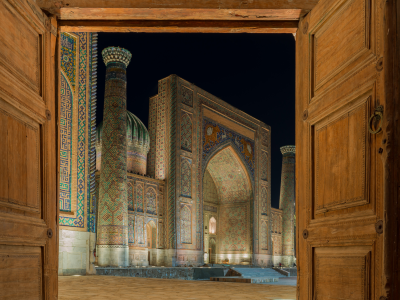
Samarkand is not a city you visit. It is a city you enter, slowly, respectfully, as if stepping into a manuscript written in tile, dust, bread, and blue light. The first impression may be the vast geometry of Registan Square, but the real beginning happens in the quieter spaces behind it: the narrow residential lanes where carved wooden doors open onto hidden courtyards, where bread ovens perfume the air with freshly baked Samarkand non, and where tea houses begin their morning ritual long before visitors arrive. Stand in Registan early, watch the light slide across Ulugh Beg’s madrasa mosaics, then leave the grand axis and drift into the city’s lived texture. This is where Samarkand becomes human.
The spiritual heart of the city reveals itself in layers rather than spectacle. Walk the mosaic corridor of Shah-i-Zinda, not as a monument, but as a passage, tilework glowing in shifting light, inscriptions whispering centuries of devotion. Climb gently toward Hazrat Khizr Mosque, where hilltop views stretch over domes and neighborhoods alike, and where silence feels intimate rather than grand. Nearby, the modest Rukhobod Mausoleum offers a quieter spiritual pause, less photographed, deeply felt. Sit with tea in a small chaikhana afterward, letting dried apricots and green tea slow your breathing. Samarkand does not rush faith; it invites reflection.
Then the city shifts from spirit to craft. In Konigil Village, just beyond the main urban rhythm, artisans at the Meros Paper Mill revive ancient mulberry-paper traditions once traded along the Silk Road. Watch bark stripped and pulped by hand, sheets pressed and dried under open air. Hold a finished page and realize that knowledge once traveled the world on material just like this. Back in the city, lose yourself inside Siyob Bazaar’s specialist lanes, the bread masters imprinting patterns into warm loaves, spice sellers layering cumin and coriander, dried-fruit merchants offering pistachios and figs like edible jewels. Taste selectively. Ask questions. Buy what you understand, not what you’re told to buy.
Samarkand’s intellectual elegance appears quietly. At the remains of Ulugh Beg Observatory, you stand where 15th-century astronomers recalculated the known universe. It is a place of humility, proof that this city once looked not only at earth, but at the stars. Nearby, the Imam al-Maturidi Mausoleum anchors theological depth in serene simplicity, reminding you that scholarship here was both scientific and spiritual. Walk onward through lesser-traveled residential corridors where children play beneath carved balconies and family kitchens release the scent of plov prepared without performance, only precision.
Beyond the monuments, the countryside completes the story. A short journey to Urgut Market introduces embroidered textiles, hand-forged knives, and ceramic traditions still rooted in local identity rather than export demand. Orchard villages surround Samarkand with vineyards and fruit stalls that speak of agricultural continuity older than empire. Evenings return you to the city core, where Registan glows gold and forgiving, and where lantern-lit streets carry a softness that photographs cannot capture.
Samarkand’s greatest luxury is continuity. Monument and market. Astronomy and bread. Tile and dust. It is a city where scholarship, spirituality, craftsmanship, and daily life still breathe the same air. To walk it well is to move at the pace of memory, and to leave carrying not souvenirs, but understanding.
Attractions & Experiences:
Registan Square at first light
Backstreet residential lanes near Registan
Traditional bread ovens & Samarkand non
Shah-i-Zinda necropolis corridor
Hazrat Khizr Mosque hilltop panorama
Rukhobod Mausoleum
Local chaikhana tea ritual
Konigil Village excursion
Meros Paper Mill
Siyob Bazaar specialist spice & dried fruit lanes
Ulugh Beg Observatory ruins
Imam al-Maturidi Mausoleum
Family-run plov houses
Urgut Market
Orchard-village countryside loop

