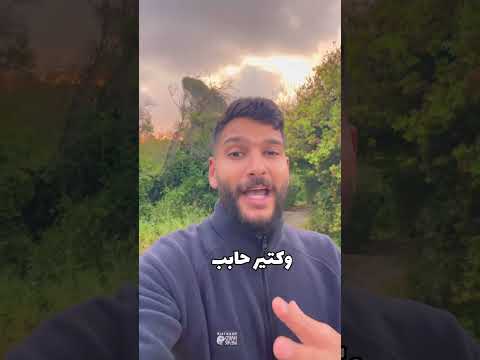
There are places that feel timeless—until they suddenly don’t. In this journey to Al-Quds (Jerusalem) and the route down towards the Sea of Galilee, Hamzeh Afghani sets out for a purpose that feels both personal and urgent: to see what has happened to a landscape that many people around the world have been discussing.
From the outset, the video frames the Sea of Galilee as more than a destination. It becomes part of a wider conversation about end times, with references to major religious narratives and the idea that the drying of the lake is being spoken about as a sign. Whether you view those beliefs as literal or symbolic, the atmosphere of the trip is unmistakably heightened—because what Hamzeh describes is not simply a change in scenery, but a change in reality.
Why the Sea of Galilee Feels Like a Final Chapter
Hamzeh explains that news channels and people worldwide are talking about the Sea of Galilee beginning to dry up. In his telling, he wants to understand it with his own eyes—imaging the place where he previously swam, where the water once felt deep, and then realising that the water has now completely dried up too.
His descriptions turn the environment into a paradox: in what he calls the cold region, the scenery feels lush and alive—almost like a tropical forest—yet the water is gone. He also notes devastation around a local Arab village inside the city of Tiberias, underlining that this isn’t just a natural story unfolding, but one that’s unfolding amid human disruption.
Leaving Jerusalem: Choosing the Road to Beit She’an
The journey begins from Jerusalem, with Hamzeh travelling towards the lower regions. He mentions two possible routes to reach the Sea of Galilee area:
- The easier route, though it includes checkpoints and inspections.
- The coastal route, which is described as far and would mean arriving too late (it is already afternoon).
Because the timing matters, and because this is framed as an adventure that could be intense, Hamzeh chooses to keep moving and heads for the checkpoints along the route.
Camping Gear, Limited Space, and Local Supplies
Hamzeh travels with camping items and prepares to camp alone at the Sea of Galilee. He describes how he packs his tent, blankets, clothes and essentials into a limited space, even mounting everything around a motorcycle journey. He sets expectations early: there will be no room for “extra” comforts—so he focuses on what he needs to survive.
When he stops near Al-Auja, he buys supplies carefully. He picks up tuna, sardines, dates, and water. A highlight is his search for fresh dates (rutab), which he prefers over dried varieties, describing them as delicious and served ice-cold from a fridge.
Prayer Stops and New Encounters Along the Way
As the journey continues, Hamzeh describes making stops to pray. He also explores towns and areas he has not filmed before. One such stop is Zubaidat, which he describes as a place that feels little-known to many travellers from Jerusalem and the wider region.
In Zubaidat, he looks specifically for a towel—something he says he needs because he hopes to swim during his visit. The local shop experience becomes more than a shopping moment: Hamzeh speaks with friendly locals, learns more about the area, and notes how the population seems quieter because many people may be away working.
Moments that Shape the Atmosphere
- Local hospitality while searching for essentials.
- Small-town landmarks such as a mosque near the road.
- Views into the Jordan Valley and the sight of mountains beyond.
The Reality of Checkpoints Near the Jordan Line
As Hamzeh continues, he emphasises the feeling of being searched at a checkpoint on his motorcycle. He describes barbed wire along the line and the proximity of Jordan—making clear that, in this part of the region, geography and security are tightly interwoven. He also addresses how difficult the situation can feel for local people.
Beit She’an: Historic Surroundings and No Place to Sleep
Hamzeh reaches Beisan / Beit She’an and notes that it is a historic Roman city, pointing out pillars he believes are from that era. He also shares that people from the West Bank cannot reach the city, framing it as a separate, restricted space.
While he mentions displacement in 1948 and notes uncertainty about current demographics, he does not present the details as absolute facts. What he focuses on most is the practical challenge: he intended to sleep there, but finds that there is no place to stay. That forces him to shift plans and continue thinking about where he will camp next.
What to Expect When the Sea Changes
In Hamzeh Afghani’s video, the Sea of Galilee is not treated like a standard travel itinerary. It is approached as a living question: what does it mean when a place you know changes so dramatically? The journey combines landscape, religious context, everyday local encounters, and the physical reality of checkpoints and restricted movement.
If you’re drawn to meaningful travel—where history, faith, and local life meet the present—this video offers a compelling narrative of exploration and caution, framed by a desire to see for yourself.
Plan Your Own Journey With Sakina Tours
Inspired by the route down from Jerusalem and the atmosphere around Tiberias and the Sea of Galilee? At Sakina Tours, we craft curated travel experiences designed for travellers who want to go beyond the surface—guided by comfort, care, and thoughtful planning. Tell us what you want to experience, and we’ll help shape the right itinerary for your next adventure.